Biohazard Cleaning: What the UK Still Gets Wrong
Rapid Response: +44 7506 709450
Biohazard cleaning is one of the most misunderstood services in the UK. Often confused with deep cleaning or incorrectly treated as a standard cleaning task, biohazard remediation involves serious health risks, strict legal responsibilities, and specialist training that most people — including many businesses — are unaware of until something goes wrong.
As the UK’s first dedicated biohazard cleaning company, Biohazards.co.uk has spent decades responding to incidents where incorrect handling, delayed action, or unqualified cleaning has led to further contamination, health exposure, or legal consequences. This guide exists to clarify what biohazard cleaning really involves, why it matters, and why experience in this field is not optional — it is essential.
What Is Biohazard Cleaning? (And What It Is Not)
Biohazard cleaning refers to the professional removal, disinfection, and safe disposal of biological and hazardous materials that pose a risk to human health. These materials cannot be treated with domestic products, standard cleaning methods, or general waste disposal.
Biohazard cleaning is not:
-
Standard deep cleaning
-
End-of-tenancy cleaning
-
Commercial janitorial work
-
DIY sanitisation
It is a regulated, high-risk service that requires:
-
Specialist PPE
-
Approved disinfectants and neutralising agents
-
Controlled waste handling
-
Legal compliance with UK regulations
Failing to follow correct procedures can expose occupants, cleaners, and the wider public to serious harm.
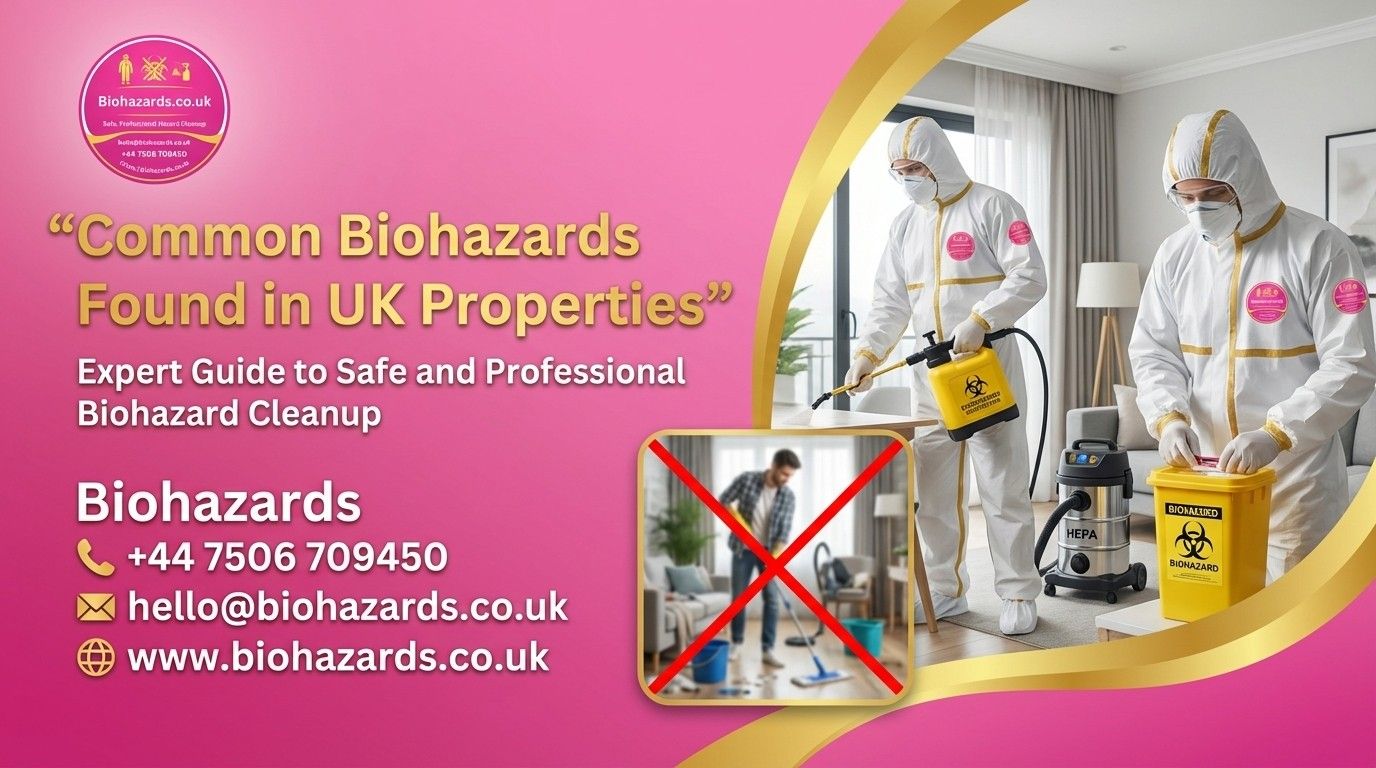
Common Biohazards Found in UK Properties
Biohazards can exist in far more environments than people expect. Over the years, we’ve responded to incidents in private homes, offices, industrial units, vehicles, and public spaces.
Common biohazards include:
-
Blood and bodily fluids
-
Human or animal remains
-
Infectious waste and sharps
-
Drug paraphernalia and needle contamination
-
Sewage and wastewater
-
Decomposed organic matter
-
Mould associated with water damage
-
Contaminated air particles following fires or trauma
Each of these requires a different remediation approach, and incorrect treatment can spread contamination rather than remove it.and you can call on +44 7506 709450
Why Biohazard Cleaning Is a Public Health Issue
Biohazard contamination does not stop at visible surfaces. Pathogens can remain active on materials, in porous surfaces, and in the air long after an incident has occurred.
Without proper remediation:
-
Bacteria and viruses may survive for days or weeks
-
Cross-contamination can occur via footwear, tools, or ventilation
-
Vulnerable individuals may face heightened risk
-
Properties may become unsafe for occupation
This is why biohazard cleaning is not simply about cleanliness — it is about containment, neutralisation, and risk prevention.
The Legal Reality of Biohazard Cleaning in the UK
One of the most overlooked aspects of biohazard cleaning is legal responsibility. In the UK, the handling, transport, and disposal of hazardous waste is governed by strict legislation, including:
-
The Health and Safety at Work Act
-
Control of Substances Hazardous to Health (COSHH)
-
Environmental Protection Act
-
Hazardous Waste Regulations
Improper disposal — such as placing contaminated materials in domestic bins — can result in serious legal penalties, including fines and prosecution.
Professional biohazard cleaning companies operate within these frameworks to ensure compliance, traceability, and public safety.
Why Experience Matters More Than Equipment
In biohazard cleaning, equipment alone is not enough. Two companies may use similar disinfectants or PPE, but outcomes differ drastically based on experience, decision-making, and situational judgement.
As the UK’s first biohazard cleaning specialists, Biohazards.co.uk has been involved in:
-
Early development of UK biohazard response standards
-
High-risk, multi-agency incidents
-
Complex decontamination cases involving multiple hazards
Experience determines:
-
How contamination is assessed
-
Which materials can be safely treated or must be removed
-
How to prevent secondary exposure
-
When an environment is genuinely safe to reoccupy
When DIY Cleaning Becomes Dangerous
A common and understandable reaction after an incident is to “clean it up quickly.” Unfortunately, this often causes more harm than good.
DIY biohazard cleaning can:
-
Spread pathogens through improper wiping or vacuuming
-
Expose individuals to infectious material without protection
-
Contaminate waste systems and drainage
-
Create long-term health risks that are not immediately visible
By the time professional help is called, contamination may already be worse.
Who Needs Professional Biohazard Cleaning?
Biohazard cleaning is required by a wide range of individuals and organisations, including:
-
Homeowners and landlords
-
Letting agents and housing associations
-
Employers and facilities managers
-
Local authorities and councils
-
NHS trusts and care providers
-
Emergency services
In many cases, professional intervention is not just recommended — it is the responsible and lawful course of action.
Why Biohazards.co.uk Exists
Biohazards.co.uk was established to address a critical gap in the UK: the absence of dedicated, specialist biohazard cleaning services. At a time when such incidents were often mishandled or ignored, the company set the standard for professional, ethical, and compliant biohazard remediation.
Being the UK’s first biohazard cleaning company is not just a milestone — it is a responsibility that continues to shape how the service is delivered today.
Trauma, Disease & Extreme Contamination Explained
Professional Biohazard & Specialist Cleaning Services
At Biohazards, we provide discreet, professional and fully compliant specialist cleaning services across the UK.
Our trained technicians handle sensitive situations with care, safety and respect.
We offer expert
Crime Scene Cleaning Services,
certified
Biohazard Cleaning Services,
and thorough
Infectious Disease Cleaning Services.
For complex or high-risk environments, our specialists also deliver professional
Hazmat Cleaning Services.
Crime Scene and Trauma Cleaning: More Than What People Imagine
Crime scene and trauma cleaning is often portrayed inaccurately. Popular media tends to focus on dramatic visuals, but the reality is far more technical, regulated, and sensitive. In the UK, these situations commonly involve accidents, sudden deaths, medical emergencies, or incidents where biological material is present — not just criminal investigations.
The role of a biohazard cleaning specialist is not investigative and not connected to law enforcement outcomes. Instead, it is about restoring safety, dignity, and hygiene after emergency services have completed their work. This requires controlled removal of biological materials, professional disinfection, and safe disposal of contaminated contents.
Importantly, trauma cleaning must be conducted with discretion and respect. Properties are often someone’s home or workplace, and the emotional impact of these situations cannot be ignored. Experience in this field is critical, not only for safety but for handling each environment appropriately.
Why Trauma Cleaning Is Not a Standard Cleaning Task
Unlike routine cleaning, trauma remediation involves:
-
Potential exposure to bloodborne pathogens
-
Contaminated porous materials (carpets, soft furnishings, flooring)
-
Hidden contamination behind fixtures or beneath surfaces
-
Controlled waste handling and documentation
Standard cleaning companies are not equipped, insured, or trained to handle these risks. Attempting to treat trauma scenes with household disinfectants or domestic equipment can lead to cross-contamination, lingering odours, and ongoing health hazards.
Professional biohazard cleaning ensures that affected areas are properly assessed, not simply made to look clean.
Infectious Disease Decontamination in the UK
Infectious disease contamination is another area frequently misunderstood. Viruses and bacteria can survive on surfaces for extended periods, particularly in enclosed or poorly ventilated environments.
Professional decontamination is required in situations involving:
-
Known or suspected infectious exposure
-
Bodily fluid contamination
-
Shared or high-traffic environments
-
Vulnerable populations
Biohazard decontamination goes beyond surface cleaning. It includes targeted sanitisation, controlled application of disinfectants, and in some cases air treatment to address lingering contamination particles.
The objective is not cosmetic cleanliness, but risk reduction and environmental safety.
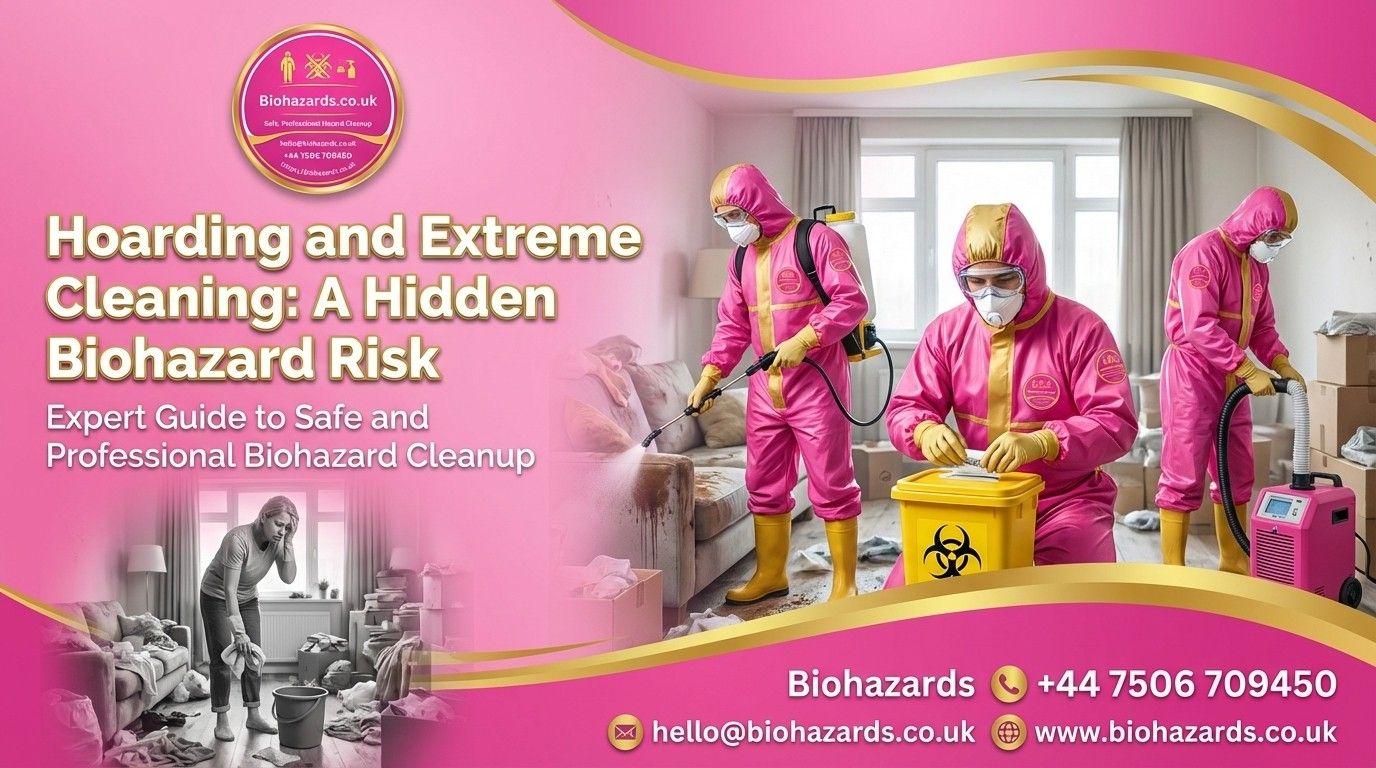
Hoarding and Extreme Cleaning: A Hidden Biohazard Risk
Hoarding situations are often incorrectly approached as simple clearance or waste removal tasks. In reality, many hoarded properties present serious biohazard risks due to prolonged accumulation of waste, organic decay, pest activity, and contamination.
Common hazards found in extreme cleaning cases include:
-
Decomposed food and organic matter
-
Human or animal waste
-
Mould and fungal growth
-
Sharps or hazardous materials
-
Compromised structural surfaces
Without proper biohazard protocols, clearing these environments can expose occupants and workers to significant health risks. Biohazard cleaning addresses both visible and hidden contamination, ensuring the property is genuinely safe to occupy again.hello@biohazards.co.uk
Why “Deep Cleaning” Is Not Biohazard Cleaning
The term “deep cleaning” is often used loosely in the cleaning industry, but it should not be confused with biohazard remediation.
Deep cleaning typically focuses on:
-
Thorough surface cleaning
-
Dust, grease, and grime removal
-
Aesthetic improvement
Biohazard cleaning focuses on:
-
Pathogen neutralisation
-
Controlled waste disposal
-
Contamination containment
-
Compliance with health and environmental regulations
Confusing the two can lead to unsafe outcomes. Biohazard environments require specialist assessment, equipment, and procedures that go far beyond conventional cleaning practices.
Fire, Flood, and Sewage: Overlooked Biohazards
Fire and flood damage often introduce secondary biohazards that are not immediately obvious. Smoke residues, contaminated water, and damaged materials can create environments where bacteria and harmful substances thrive.
Sewage contamination, in particular, poses serious health risks due to the presence of pathogens and toxic substances. Proper biohazard cleaning in these situations includes:
-
Removal of contaminated materials
-
Thorough disinfection
-
Odour neutralisation
-
Air quality improvement
Failure to address these elements properly can result in long-term health concerns and property damage.
The Role of PPE and Training in Biohazard Cleaning
Personal Protective Equipment (PPE) is a visible aspect of biohazard cleaning, but it is only effective when combined with proper training and procedures.
Professional biohazard cleaners are trained to:
-
Assess risk levels accurately
-
Select appropriate PPE for each scenario
-
Prevent cross-contamination during removal
-
Decontaminate equipment and themselves safely
Incorrect use of PPE can be as dangerous as having none at all. This is one of the key reasons why specialist training — not just equipment — defines a legitimate biohazard cleaning service.
What Sets Established Specialists Apart
Being the UK’s first biohazard cleaning company means having firsthand experience with how the industry has evolved — including the mistakes that shaped today’s standards.
Established specialists bring:
-
Proven protocols refined over decades
-
Knowledge of complex, multi-hazard environments
-
Experience working alongside authorities and organisations
-
A track record of compliant, ethical practice
In high-risk situations, trust is built through consistency and history — not marketing claims.
Biohazard Cleaning and Property Responsibility
For landlords, employers, and property managers, biohazard contamination creates not just a safety issue but a duty of care. Failing to address contamination appropriately can lead to:
-
Health complaints
-
Legal disputes
-
Reputational damage
-
Extended property downtime
Professional biohazard cleaning ensures that responsibilities are met and that environments are restored to a safe, usable condition.
Why Discretion Is Essential
Many biohazard situations occur under sensitive circumstances. Discretion protects:
-
Occupants and families
-
Businesses and employees
-
Reputations and privacy
Experienced biohazard cleaners understand the importance of unmarked vehicles, controlled access, and respectful communication throughout the process.
Choosing the Right Specialists & Avoiding Costly Mistakes
How to Choose a Legitimate Biohazard Cleaning Company
When faced with a biohazard situation, many people search urgently and choose the first company that appears available. Unfortunately, this is where mistakes often happen. Not every company advertising “biohazard cleaning” is genuinely qualified to carry it out.
A legitimate biohazard cleaning company should demonstrate:
-
Clear experience specifically in biohazard remediation
-
Documented procedures and safety protocols
-
Proper waste handling and disposal arrangements
-
Trained technicians, not general cleaners
-
Transparency about what is included in the service
Vague claims, unclear pricing, or an inability to explain processes are warning signs that a company may not be operating at the required professional standard.
Certifications, Training, and Compliance: What Actually Matters
Clients often assume there is a single licence that allows a company to perform biohazard cleaning. In reality, compliance is achieved through multiple layers of training, regulation, and operational standards.
Professional biohazard cleaning companies operate in line with:
-
Health and safety legislation
-
Environmental and waste regulations
-
Risk assessment and method statement protocols
-
Industry best practices developed over time
More important than a checklist of certificates is how those standards are applied in real situations. Experience ensures that protocols are followed correctly under pressure, not just documented on paper.
Understanding Hazardous Waste Handling
One of the most critical aspects of biohazard cleaning is waste management. Contaminated materials cannot be treated as ordinary refuse. Improper handling can expose waste carriers, council workers, and the public to serious health risks.
Professional biohazard cleaning involves:
-
Segregation of hazardous waste
-
Secure containment and labelling
-
Transport via approved channels
-
Disposal at licensed facilities
Any company that cannot clearly explain how contaminated waste is removed and disposed of safely should not be trusted with a biohazard environment.
Why Price Should Never Be the Only Factor
Biohazard cleaning is not a commodity service. Comparing quotes without understanding what is included can lead to unsafe outcomes.
Lower prices may indicate:
-
Incomplete decontamination
-
Inadequate PPE or training
-
Improper waste disposal
-
Rushed or superficial cleaning
The true cost of poor biohazard cleaning often appears later — through lingering odours, health concerns, repeat contamination, or legal issues. Choosing experienced specialists protects both people and property.
Common Misconceptions About Biohazard Cleaning
“If it looks clean, it is clean.”
Visual appearance is not a reliable indicator of safety. Pathogens can remain present even when surfaces appear spotless.
“Any deep cleaner can handle it.”
Standard cleaning companies are not trained or equipped to manage biohazard risks safely.
“Disinfectant solves everything.”
Incorrect application or unsuitable products can spread contamination rather than neutralise it.
“It’s only a small area.”
Biohazards often spread beyond the visible source, especially through porous materials or foot traffic.
Specialist Cleaning & Management Services
Our expert team provides safe, discreet, and professional cleaning and management solutions for challenging environments. Explore these services:
Squatter Cleaning Services
Comprehensive cleaning and clearance of properties affected by squatting, restoring them to safe and habitable conditions.
Facilities Management Service
Professional facilities management solutions to maintain safety, hygiene, and operational efficiency across properties.
Storm Damage Cleaning Services
Specialist cleaning and restoration for properties impacted by storms, flooding, and severe weather damage.
Contact our team today for immediate assistance, quotes, or to schedule a professional service.
The Importance of Proper Assessment
Every biohazard scene is different. A professional response begins with assessment, not assumptions.
An experienced specialist will evaluate:
-
Type of contamination
-
Affected materials and surfaces
-
Risk of cross-contamination
-
Occupancy and usage of the space
This assessment informs the correct remediation strategy and prevents unnecessary removal or unsafe shortcuts.
Why Documentation and Accountability Matter
In many situations — particularly for landlords, businesses, and public bodies — documentation of biohazard cleaning is essential.
Professional services can provide:
-
Confirmation of work carried out
-
Waste transfer documentation
-
Method statements upon request
-
Evidence of compliance if required
This accountability protects property owners and organisations from future disputes or liability concerns.
Biohazard Cleaning and Emotional Sensitivity
Many biohazard situations arise from deeply personal or distressing circumstances. While technical expertise is essential, so is understanding how to work respectfully within these environments.
Experienced specialists recognise when:
-
Discretion is critical
-
Communication should be minimal and clear
-
Occupants need space and privacy
-
Timing and pace matter
This level of professionalism cannot be taught quickly — it develops through years of real-world experience.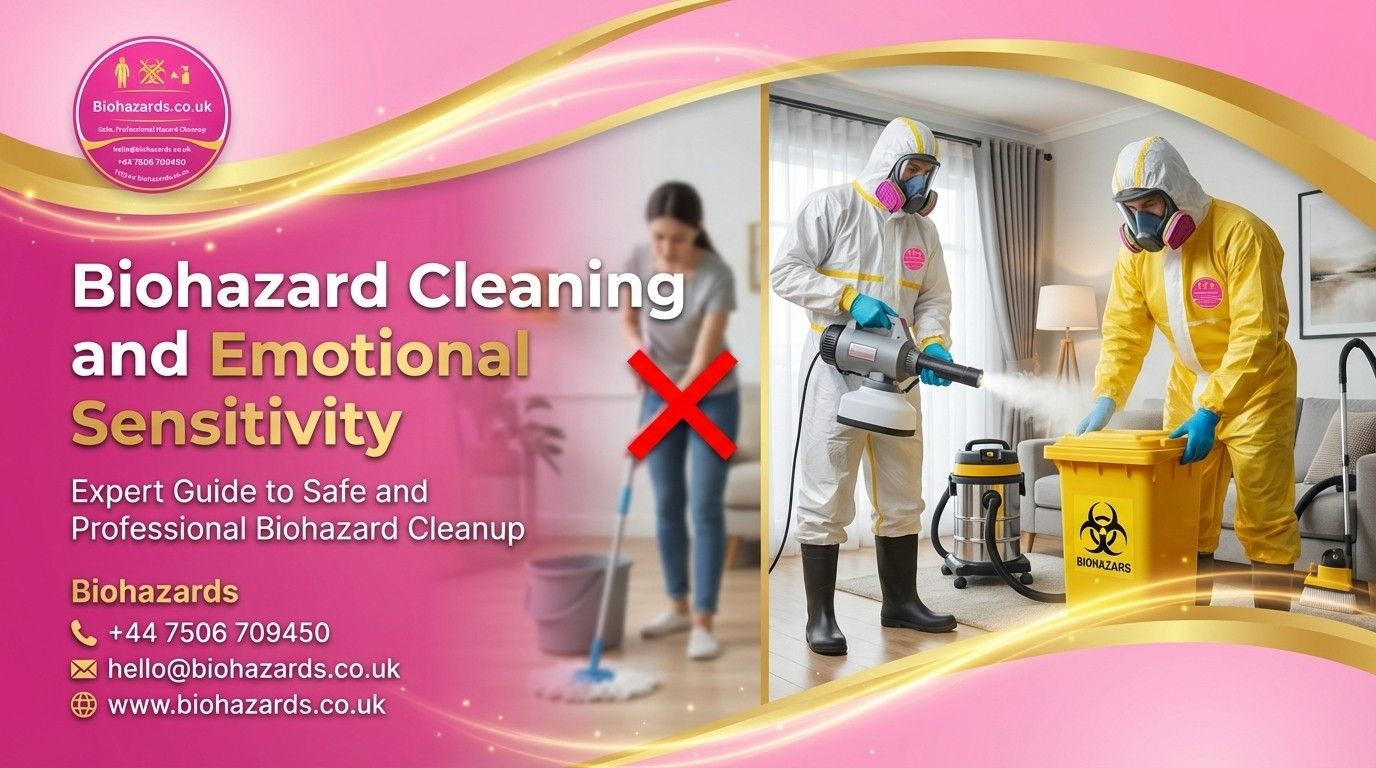
Why Longevity in the Industry Matters
Being the UK’s first biohazard cleaning company means having encountered situations long before there were established templates or widespread awareness. That longevity brings a depth of understanding that newer companies simply cannot replicate.
Over time, this experience shapes:
-
Safer procedures
-
More effective cleaning strategies
-
Better risk management
-
Ethical standards across the industry
When reputation is built over decades, it becomes a measure of reliability — not just marketing.
When to Call Biohazard Specialists Immediately
Professional biohazard cleaning should be sought without delay in cases involving:
-
Blood or bodily fluid contamination
-
Decomposition or unattended death
-
Drug paraphernalia or sharps
-
Sewage or wastewater exposure
-
Infectious contamination
-
Fire or flood damage with organic residue
Delaying intervention increases risk and often increases the complexity of remediation.
Why Biohazards.co.uk Continues to Lead
Biohazards.co.uk was established to provide a service that did not previously exist in the UK — specialist biohazard cleaning delivered professionally, ethically, and safely.
Today, that same commitment remains at the core of every response:
-
No shortcuts
-
No guesswork
-
No compromise on safety
Leadership in this industry is not about being the loudest — it’s about being trusted when it matters most.
The Questions No One Asks — and Why They Matter
What Happens After a Biohazard Clean Is Completed?
One of the most common uncertainties people have is what happens once the biohazard cleaning team leaves. This question is rarely asked directly, yet it’s crucial to peace of mind.
A professional biohazard clean does not end when visible contamination is removed. A proper service ensures:
-
Affected areas have been fully decontaminated
-
Contaminated materials have been safely removed and disposed of
-
Odours associated with biological matter are neutralised
-
Surfaces are left hygienically safe for normal use
In many cases, properties can be safely reoccupied immediately after completion. However, experienced specialists will always provide honest guidance if additional ventilation, drying time, or follow-up work is advisable.
Is Biohazard Cleaning Safe for Children and Vulnerable People?
This is a vital concern, particularly for families, care providers, and property managers. When carried out correctly, professional biohazard cleaning is designed specifically to reduce risk for vulnerable occupants.
Specialists use:
-
Approved disinfectants suitable for controlled environments
-
Targeted application methods rather than excessive chemical use
-
Procedures designed to minimise airborne spread
Importantly, reputable companies do not introduce unnecessary products or treatments. Safety is achieved through correct process, not overuse of chemicals.
Can Biohazard Contamination Come Back?
Another concern people hesitate to voice is whether contamination can return after cleaning. When biohazard remediation is thorough and properly assessed, recontamination from the original incident is highly unlikely.
Problems typically arise when:
-
The initial clean was incomplete
-
Hidden contamination was missed
-
Porous materials were not correctly removed
-
DIY or non-specialist cleaning was attempted first
This is why assessment and experience are so critical. Proper biohazard cleaning addresses root causes, not just surface symptoms.
Do Biohazard Cleaners Remove Everything?
Not always — and this is where honest communication matters.
In some cases, certain items or materials cannot be safely restored due to the level of contamination. Experienced specialists will explain:
-
What can be safely cleaned
-
What must be removed
-
Why removal is necessary
While this can be difficult for property owners, especially in residential settings, it is always done to protect long-term health and safety. Reputable companies will never remove items unnecessarily, nor will they promise restoration when it is unsafe to do so.
How Long Does Biohazard Cleaning Take?
There is no single answer, as timeframes depend on:
-
The type of biohazard
-
Size of the affected area
-
Materials involved
-
Level of contamination
Some incidents can be resolved within hours, while others require extended work over one or more days. What matters most is not speed, but completeness and safety. Rushed biohazard cleaning is rarely effective.
What About Smell and Air Quality?
Odour is often one of the most distressing aspects of biohazard incidents. Lingering smells can indicate deeper contamination within materials or the air itself.
Professional biohazard cleaning addresses odour by:
-
Removing the source, not masking it
-
Treating affected surfaces and materials
-
Improving air quality through appropriate methods
Simply covering smells with fragrances or domestic products can trap contamination rather than resolve it.
Is Biohazard Cleaning Confidential?
Confidentiality is a cornerstone of professional biohazard services. Many situations involve sensitive personal, legal, or workplace circumstances.
Established specialists prioritise:
-
Discreet attendance
-
Unmarked vehicles where appropriate
-
Controlled access to the property
-
Respectful communication
Protecting privacy is part of delivering a responsible service, not an optional extra.
Can Businesses Remain Open During Biohazard Cleaning?
In some commercial environments, limited operation may be possible depending on the nature and location of the contamination. However, safety always takes priority.
Professional assessment determines:
-
Whether areas must be isolated
-
If work can be scheduled outside operating hours
-
How to minimise disruption while maintaining safety
Attempting to continue operations without proper controls can expose staff and customers to risk and potential liability.
Why Biohazard Cleaning Is Often Delayed — and Why That’s a Problem
Delays are common, often due to shock, uncertainty, or fear of cost. Unfortunately, time can worsen biohazard conditions.
Delaying professional cleaning may:
-
Increase contamination spread
-
Allow odours to penetrate materials
-
Complicate remediation
-
Increase overall cost and downtime
Early intervention usually results in faster, safer, and more cost-effective outcomes.
What Makes a Biohazard Company Trustworthy?
Trust is built through actions, not claims. Over time, certain indicators consistently distinguish reliable specialists:
-
Clear, calm communication
-
Realistic explanations without alarmism
-
Willingness to answer difficult questions
-
No pressure tactics or exaggerated claims
-
A focus on safety rather than speed
Biohazard situations demand professionalism — not salesmanship.
Why the First Biohazard Specialists Still Matter Today
The biohazard cleaning industry in the UK exists because pioneers recognised a serious gap in public safety services. Being the UK’s first biohazard cleaning company is not just historical — it shapes how services are delivered today.
It means:
-
Experience with evolving regulations
-
Understanding of rare and complex scenarios
-
Long-standing commitment to best practice
-
A reputation built on outcomes, not trends
Longevity in this field is earned, not assumed.
Preparing for the Future: Why Awareness Matters
Biohazard incidents are rarely planned, but awareness makes a difference. Understanding what biohazard cleaning truly involves allows individuals and organisations to respond appropriately when the unexpected happens.
Preparedness reduces panic, prevents unsafe decisions, and protects people, property, and communities.
The Future of Biohazard Cleaning & Why Experience Will Always Matter
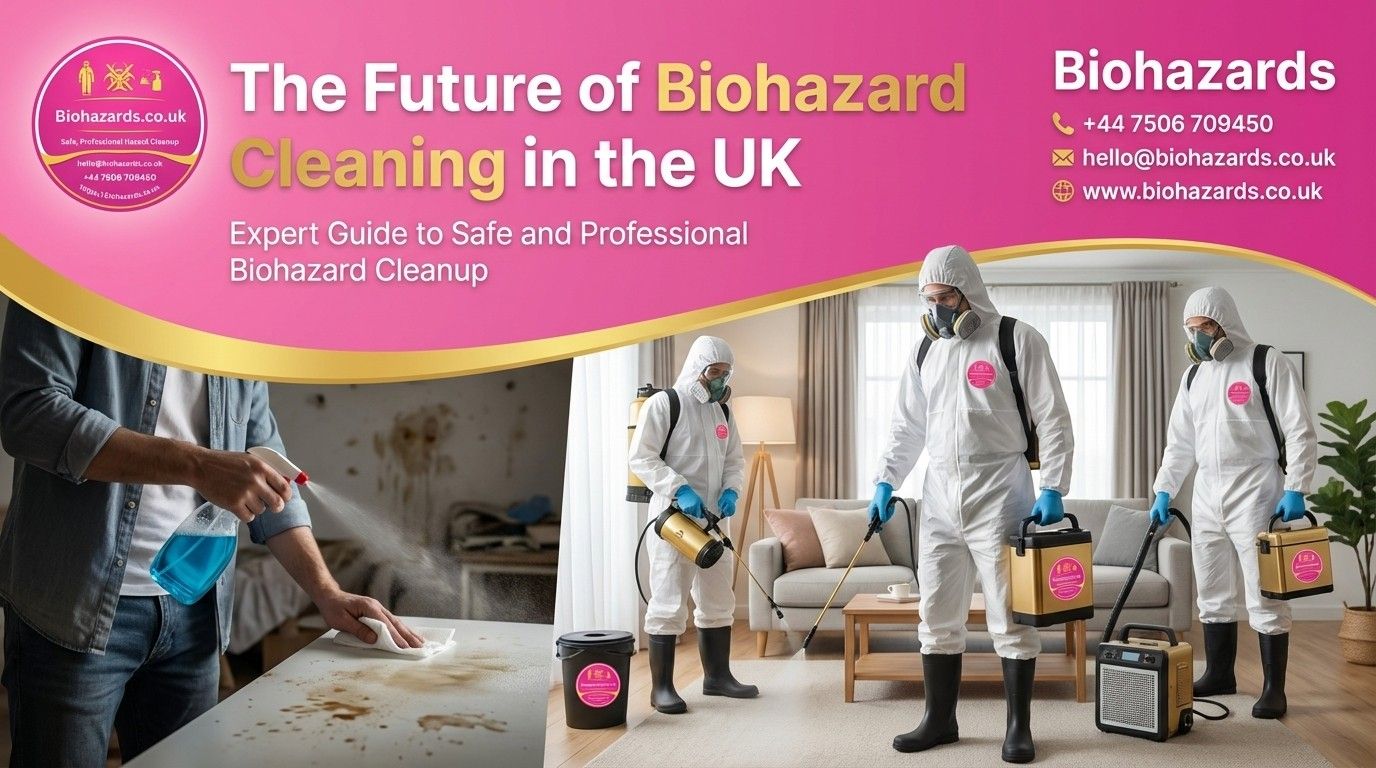
The Future of Biohazard Cleaning in the UK
Biohazard cleaning in the UK has evolved significantly, but the need for specialist expertise has never been greater. Changes in population density, property usage, public health awareness, and regulatory scrutiny mean that biohazard incidents are now recognised as serious environmental and safety concerns rather than isolated cleaning problems.
The future of the industry is shaped by:
-
Higher expectations of safety and compliance
-
Increased awareness of contamination risks
-
Greater accountability for landlords, employers, and public bodies
-
Stronger enforcement of health and environmental regulations
As standards rise, so does the importance of choosing specialists who understand both the technical demands and ethical responsibilities of biohazard remediation.hello@biohazards.co.uk
Why Biohazard Cleaning Will Never Be a “General Cleaning” Service
Despite advances in cleaning technology, biohazard remediation will always remain a specialist discipline. The risks involved — biological exposure, cross-contamination, and improper waste handling — require a level of judgement that cannot be automated or simplified.
Biohazard cleaning depends on:
-
Experience-based decision making
-
Scenario-specific risk assessment
-
Understanding how contamination behaves over time
-
Knowing when removal is safer than treatment
This is why genuine biohazard specialists are fundamentally different from general cleaning providers, no matter how advanced their equipment may be.
Raising Industry Standards Through Leadership
Industries improve when experienced operators set benchmarks that others follow. As the UK’s first biohazard cleaning company, Biohazards.co.uk has played a central role in shaping professional expectations within the sector.
Leadership in this field means:
-
Upholding safety even when it is inconvenient
-
Refusing shortcuts that compromise health
-
Treating every environment with respect
-
Maintaining discretion in sensitive situations
These values are not trends — they are foundations.
Why Awareness Protects Property Owners and Organisations
One of the most powerful outcomes of understanding biohazard cleaning is prevention. Property owners, businesses, and public-sector organisations who understand what biohazard contamination involves are better equipped to respond correctly.
Awareness helps to:
-
Avoid unsafe DIY attempts
-
Reduce exposure risks
-
Limit long-term damage to properties
-
Ensure legal and ethical responsibilities are met
Knowledge is a form of protection — especially when dealing with hazards that are not always visible.
When Professional Biohazard Cleaning Is Essential
To reinforce what truly matters, professional biohazard cleaning should always be used when environments are affected by:
-
Blood or bodily fluids
-
Decomposition or unattended death
-
Drug-related contamination
-
Sewage or wastewater
-
Infectious materials
-
Fire or flood damage involving organic matter
In these situations, specialist intervention is not excessive — it is responsible.
Why Trust Is the Real Currency in Biohazard Cleaning
People rarely choose biohazard cleaners lightly. These services are often needed during difficult, stressful, or unexpected circumstances. Trust, therefore, becomes the most valuable element of the service.
Trust is built through:
-
Clear explanations without exaggeration
-
Calm, respectful conduct
-
Consistent standards over time
-
A proven history of handling complex cases
In biohazard cleaning, reputation is earned one environment at a time.
The Role of Biohazards.co.uk Today
Being the UK’s first biohazard cleaning company is not simply about history — it is about continuity. The same principles that defined the service at its inception continue to guide how it operates today.
Biohazards.co.uk exists to:
-
Protect people from unseen risks
-
Restore environments safely and responsibly
-
Support individuals, organisations, and communities
-
Deliver specialist cleaning without compromise
This is not a service that can be improvised. It is a discipline built on experience, responsibility, and care.
Final Guidance for Anyone Facing a Biohazard Situation
If there is one key message to take from this guide, it is this: biohazard contamination should never be underestimated.
When faced with uncertainty:
-
Do not rely on appearance alone
-
Do not assume standard cleaning is sufficient
-
Do not delay professional assessment
-
Do not be afraid to ask questions
Choosing experienced specialists early protects health, property, and peace of mind.
Why This Guide Exists
This article was written to address confusion, misinformation, and assumptions surrounding biohazard cleaning in the UK. It exists to provide clarity, reassurance, and practical understanding — directly from the specialists who helped establish the industry.
By sharing knowledge openly, Biohazards.co.uk continues its long-standing role as a trusted authority, not just a service provider.
When Expertise Matters Most
Biohazard cleaning is not something most people ever expect to need. But when it is needed, it must be done correctly — the first time.
That is why experience, history, and professionalism will always matter in this field.
Professional Biohazard Cleaning Checklist
A Comprehensive Safety, Compliance & Remediation Guide
1. Initial Assessment & Risk Evaluation
☐ Identify type of biohazard present (blood, bodily fluids, decomposition, sharps, sewage, infectious material, etc.)
☐ Assess scale and spread of contamination (visible and potential hidden areas)
☐ Evaluate porous vs non-porous materials affected
☐ Determine risks to occupants, cleaners, and the public
☐ Confirm property usage (residential, commercial, industrial, public)
☐ Identify vulnerable individuals or restricted access requirements
☐ Decide on isolation or containment needs
☐ Establish safe entry and exit points
2. Legal & Compliance Preparation
☐ Confirm applicable UK health and safety obligations
☐ Review COSHH considerations
☐ Confirm hazardous waste classification
☐ Prepare method statement and risk assessment (RAMS)
☐ Verify waste carrier and disposal arrangements
☐ Ensure duty of care documentation is in place
☐ Confirm insurance coverage for biohazard remediation
3. Personal Protective Equipment (PPE)
☐ Select PPE appropriate to hazard level
☐ Disposable coveralls (fluid-resistant)
☐ Gloves (double-gloving where required)
☐ Respiratory protection (mask or respirator as appropriate)
☐ Eye and face protection
☐ Footwear protection
☐ Secure donning and doffing area
☐ PPE disposal protocol confirmed
4. Scene Preparation & Containment
☐ Secure and isolate affected area
☐ Prevent cross-contamination routes
☐ Shut down HVAC or airflow where necessary
☐ Protect unaffected surfaces and areas
☐ Establish waste handling zone
☐ Control access to authorised personnel only
5. Removal of Contaminated Materials
☐ Identify items requiring removal vs treatment
☐ Remove soft furnishings and porous materials if necessary
☐ Safely collect sharps using approved containers
☐ Double-bag contaminated waste
☐ Label hazardous materials correctly
☐ Avoid agitation or aerosolisation of contaminants
6. Biohazard Cleaning & Decontamination
☐ Use approved disinfectants suitable for biohazards
☐ Apply correct dwell times for neutralisation
☐ Clean all affected surfaces methodically
☐ Address hidden contamination (behind fixtures, under flooring)
☐ Decontaminate tools and equipment during process
☐ Repeat treatment if required
7. Odour Control & Air Quality
☐ Identify source of biological odours
☐ Remove odour-causing materials
☐ Apply appropriate odour neutralisation methods
☐ Improve ventilation where safe
☐ Assess need for air treatment or purification
8. Waste Handling & Disposal
☐ Secure all contaminated waste for transport
☐ Maintain segregation of hazardous waste
☐ Use licensed waste carriers
☐ Dispose of waste at approved facilities
☐ Retain waste transfer documentation
☐ Ensure no contaminated materials enter general waste streams
9. Post-Cleaning Verification
☐ Conduct visual inspection
☐ Confirm removal of visible contamination
☐ Assess odour elimination
☐ Ensure surfaces are safe for contact
☐ Confirm no secondary contamination
☐ Determine readiness for reoccupation
10. Final Decontamination & PPE Removal
☐ Decontaminate reusable equipment
☐ Remove PPE safely in correct sequence
☐ Dispose of PPE as hazardous waste
☐ Perform personal hygiene procedures
☐ Prevent transfer of contaminants off-site
11. Documentation & Client Handover
☐ Record work completed
☐ Provide confirmation of biohazard remediation
☐ Supply waste documentation if required
☐ Offer guidance on reoccupation
☐ Advise on follow-up or preventative measures
☐ Maintain confidentiality
12. Ethical & Professional Considerations
☐ Maintain discretion at all times
☐ Communicate calmly and clearly
☐ Avoid alarmist language
☐ Respect affected individuals and environments
☐ Operate without judgement
☐ Prioritise safety over speed
Why This Checklist Matters
Biohazard cleaning is not defined by how quickly a space looks clean — it is defined by how safely and thoroughly contamination is eliminated. Following a structured checklist ensures:
-
Legal compliance
-
Public health protection
-
Reduced risk of recontamination
-
Professional accountability
-
Consistent, defensible outcomes
Professional Insight
Every biohazard environment is different. A checklist supports consistency, but experience determines judgement. This is why specialist biohazard cleaning must always be carried out by trained professionals with a proven track record.
Biohazard Cleaning Prices in the UK: A Complete Cost Breakdown by Service
Biohazard cleaning is a specialist service, and pricing reflects the risk, training, equipment, compliance, and responsibility involved. Unlike standard cleaning, biohazard remediation deals with materials that can pose serious health risks and must be handled, transported, and disposed of in accordance with UK regulations.
This guide explains how much biohazard cleaning costs in the UK, broken down by service type, what is included, and why prices can vary.
Important note: Biohazard cleaning prices are always assessed on a case-by-case basis. The figures below are guideline ranges, not fixed quotes.
What Affects Biohazard Cleaning Prices?
Before breaking down individual services, it’s important to understand the key factors that influence cost:
-
Type of biohazard (blood, bodily fluids, sharps, sewage, decomposition, etc.)
-
Size of the affected area
-
Level and spread of contamination
-
Porous vs non-porous materials
-
Time required on site
-
PPE and specialist equipment needed
-
Waste volume and disposal costs
-
Access, location, and urgency (same-day or emergency response)
Because of these variables, reputable biohazard companies do not advertise flat prices without assessment.
1. Crime Scene Cleaning Prices (UK)
Typical cost range:
£1,200 – £4,500+
Crime scene cleaning involves the removal and decontamination of blood, bodily fluids, and potentially infectious material after police or emergency services have completed their work.
Pricing depends on:
-
Number of rooms affected
-
Extent of contamination
-
Removal of carpets, flooring, or furnishings
-
Odour treatment requirements
What’s usually included:
-
Full biohazard risk assessment
-
Specialist PPE and equipment
-
Removal of contaminated materials
-
Professional disinfection and sanitisation
-
Hazardous waste disposal
2. Trauma & Sudden Death Cleaning Prices
Typical cost range:
£1,000 – £3,500+
This service is required following accidents, medical emergencies, or sudden deaths where biological contamination is present.
Factors affecting price:
-
Time elapsed before discovery
-
Degree of biological spread
-
Decomposition-related contamination
-
Odour penetration into materials
These cases often require additional treatment and material removal, which can increase cost.
Professional Biohazard & Specialist Cleaning Services
At Biohazards, we provide discreet, professional and fully compliant specialist cleaning services across the UK.
Our trained technicians handle sensitive situations with care, safety and respect.
We offer expert
Crime Scene Cleaning Services,
certified
Biohazard Cleaning Services,
and thorough
Infectious Disease Cleaning Services.
For complex or high-risk environments, our specialists also deliver professional
Hazmat Cleaning Services.
3. Unattended Death & Decomposition Cleaning Prices
Typical cost range:
£2,000 – £6,000+
Unattended deaths present some of the most complex biohazard conditions, often involving bodily fluid seepage into flooring, subfloors, and structural elements.
Why costs are higher:
-
Advanced contamination
-
Strong odours requiring neutralisation
-
Removal of porous materials
-
Extended treatment time
This is one of the most labour-intensive biohazard services and cannot be safely handled by general cleaners.
4. Hoarding & Extreme Cleaning Prices
Typical cost range:
£1,500 – £10,000+
Hoarding and extreme cleaning often combine biohazard remediation, waste removal, and deep cleaning.
Pricing depends on:
-
Volume of waste
-
Presence of biological hazards
-
Pest contamination
-
Property size and condition
Services may include:
-
Decluttering and clearance
-
Biohazard disinfection
-
Odour removal
-
Controlled waste disposal
Large or long-neglected properties can require multi-day teams.
5. Needle, Sharps & Drug Contamination Cleaning Prices
Typical cost range:
£750 – £2,500+
This service is commonly required in:
-
Public buildings
-
Rental properties
-
Stairwells and communal areas
-
Vacant or squatted properties
Pricing factors:
-
Number of sharps
-
Risk level of contamination
-
Access and visibility
-
Disposal requirements
Sharps removal must follow strict safety and disposal procedures.
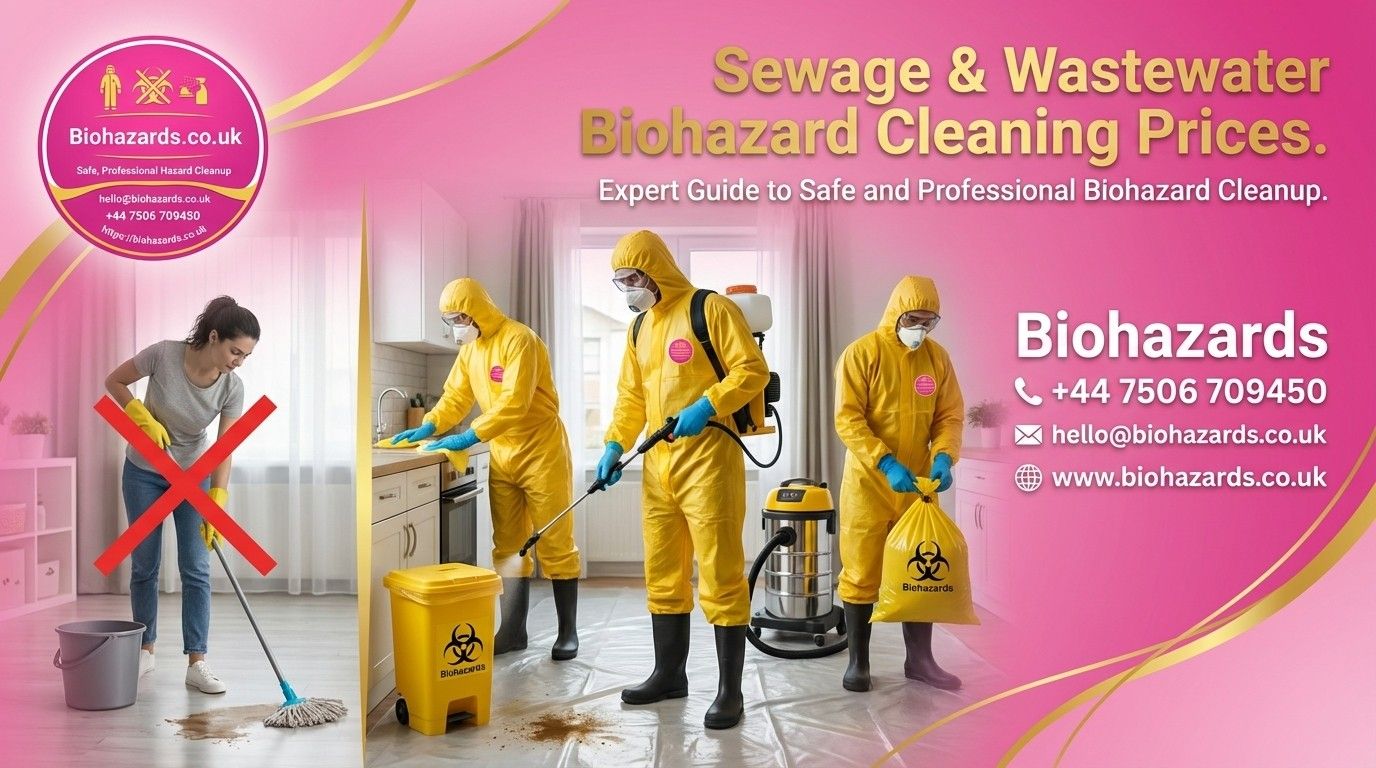
6. Sewage & Wastewater Biohazard Cleaning Prices
Typical cost range:
£1,000 – £4,000+
Sewage contamination contains harmful pathogens and requires specialist handling.
Cost depends on:
-
Area affected
-
Depth of contamination
-
Removal of soaked materials
-
Drying and sanitisation requirements
Sewage biohazard cleaning often includes odour treatment and air quality improvement.hello@biohazards.co.uk
7. Infectious Disease Decontamination Prices
Typical cost range:
£600 – £3,000+
This service may be required in:
-
Residential properties
-
Workplaces
-
Care environments
-
Shared or high-traffic spaces
Pricing factors:
-
Size of space
-
Number of touchpoints
-
Level of risk
-
Need for repeat treatments
The focus is on risk reduction and environmental safety, not cosmetic cleaning.
8. Fire, Smoke & Flood-Related Biohazard Cleaning Prices
Typical cost range:
£1,000 – £5,000+
After fires or floods, biological contamination can develop due to:
-
Water damage
-
Organic residue
-
Smoke-affected materials
Costs vary based on:
-
Extent of damage
-
Type of contamination
-
Structural involvement
These cases often overlap with restoration services.
9. Vehicle Biohazard Cleaning Prices
Typical cost range:
£500 – £2,500+
Vehicles may require biohazard cleaning following:
-
Accidents
-
Medical incidents
-
Crime or drug contamination
Pricing depends on:
-
Vehicle type
-
Contamination level
-
Interior materials affected
Emergency & Same-Day Biohazard Cleaning Costs
Urgent or out-of-hours responses may incur additional charges due to:
-
Rapid mobilisation
-
Extended hours
-
Increased staffing requirements
However, early intervention often reduces overall cost by limiting spread and damage.
Why Biohazard Cleaning Is More Expensive Than Standard Cleaning
Biohazard cleaning costs reflect:
-
Specialist training and experience
-
PPE and safety equipment
-
Approved disinfectants
-
Legal waste disposal
-
Insurance and compliance
-
High-risk working conditions
Lower prices often indicate cut corners or incomplete remediation, which can create long-term risks.
Is Biohazard Cleaning Covered by Insurance?
In some cases, biohazard cleaning may be covered under:
-
Home insurance
-
Landlord insurance
-
Commercial property insurance
Coverage depends on policy terms and the nature of the incident. Professional documentation from a specialist provider can assist with claims.
Why Accurate Assessment Matters
No two biohazard situations are identical. Reputable providers will:
-
Assess before quoting
-
Explain costs clearly
-
Avoid fixed prices without inspection
-
Focus on safety, not speed
Transparency is a key indicator of a legitimate biohazard cleaning company.
Professional Biohazard Cleaning Case Studies: Residential, Commercial & Industrial
Residential Case Studies (10)
1. Confined Space Biohazard Cleaning – Mark, Manchester
Scenario: Mark discovered hazardous chemical contamination in his home basement after a DIY cleaning accident.
Challenges: Limited ventilation, chemical residue, and risk of toxic inhalation.
Methodology: Full PPE, HEPA ventilation, chemical neutralisation, surface decontamination, and ozone air purification.
Outcome: Basement fully safe for storage, air quality restored, client satisfied with compliance documentation.
2. Unattended Death Cleaning – Sarah, Birmingham
Scenario: Unattended death in a residential flat.
Challenges: Decomposition contamination, strong odours, and multiple porous surfaces affected.
Methodology: Full room isolation, removal of contaminated items, professional disinfectants, odour neutralisation, HEPA vacuuming, and air purification.
Outcome: Flat restored, odour-free, ready for reoccupation.
3. Suicide Scene Cleaning – James, London
Scenario: Suicide in a private home.
Challenges: Bloodborne pathogens, emotional sensitivity.
Methodology: Trauma scene remediation protocols, disinfectant application, sharps removal, confidential handling.
Outcome: Safe, restored environment; family supported throughout.
4. Squatters Cleaning – Emily, Bristol
Scenario: Squatters had left behind waste, drug paraphernalia, and biohazard contamination.
Challenges: Unknown biological hazards, odour, sharps.
Methodology: PPE, waste removal, decontamination, odour neutralisation, air purification.
Outcome: Property secured and safe for new tenants.
5. Drug Den Cleaning – Alex, Liverpool
Scenario: Former drug den with chemical residues and biohazards.
Challenges: Toxic chemical exposure, sharps, potential fire hazards.
Methodology: PPE, chemical neutralisation, deep cleaning of surfaces, odour removal, air purification.
Outcome: Premises fully safe for inspection and lease.
6. Workplace Accident Cleaning – Fiona, Leeds
Scenario: Workplace injury with blood contamination in a factory.
Challenges: Large area, high-traffic zone, need for minimal downtime.
Methodology: Section isolation, disinfectants, sharps removal, odour control.
Outcome: Safe return-to-work environment within 24 hours.
7. Crime Scene Cleaning – Daniel, Newcastle
Scenario: Residential burglary resulting in violent altercation.
Challenges: Blood, broken glass, mixed biohazards.
Methodology: Trauma cleaning protocols, sharps removal, surface sanitisation, odor neutralisation.
Outcome: Family able to return safely; property documented for insurance purposes.
8. Vehicle Biohazard Cleaning – Rachel, Manchester
Scenario: Car involved in medical incident with blood contamination.
Challenges: Upholstery and carpet penetration, confined space.
Methodology: Vehicle interior disassembly, disinfectants, steam cleaning, ozone air purification.
Outcome: Vehicle restored, safe for resale or continued use.
9. Mould & Nicotine Cleaning – Tom, Glasgow
Scenario: Residential flat with smoke damage and mould growth.
Challenges: Porous walls, odour, health risk for occupants.
Methodology: Surface cleaning, HEPA vacuuming, odour removal, ozone treatment.
Outcome: Healthy indoor air quality restored; mould eradicated.
10. Sewage Backup Cleaning – Linda, Sheffield
Scenario: Basement flooding with sewage contamination.
Challenges: Biological hazards, odour, and water penetration.
Methodology: PPE, pump and waste disposal, disinfection, odour neutralisation.
Outcome: Property safe, odour-free, fully sanitised.
Commercial Case Studies (7)
11. Office Trauma Cleaning – Simon, London
Scenario: Employee injury in office with blood contamination.
Challenges: High-traffic area, business continuity.
Methodology: Section isolation, biohazard removal, disinfectants, odour control.
Outcome: Business resumed with minimal disruption.
12. Restaurant Crime Scene Cleaning – Maria, Leeds
Scenario: Assault in restaurant kitchen.
Challenges: Food prep surfaces contaminated, public health risks.
Methodology: Disinfection, surface sanitisation, full documentation.
Outcome: Reopened for business safely.
13. Hotel Hoarding & Biohazard Cleaning – Kevin, Edinburgh
Scenario: Guest hoarding left biohazards in hotel room.
Challenges: Strong odours, waste, sharps.
Methodology: Waste removal, surface decontamination, odour neutralisation.
Outcome: Room returned to inventory, safe for guests.
14. Industrial Chemical Spill & Biohazard – Liam, Manchester
Scenario: Factory chemical spill mixed with biological waste.
Challenges: Toxic exposure, surface contamination.
Methodology: Containment, PPE, neutralisation, decontamination, waste disposal.
Outcome: Industrial workspace safe, compliant with health and safety regulations.
15. School Trauma Scene Cleaning – Claire, Birmingham
Scenario: Student injury resulting in blood contamination.
Challenges: Sensitive environment, child safety.
Methodology: Trauma cleaning protocols, disinfectants, odour removal, HEPA filtration.
Outcome: School reopened safely.
16. Retail Store Suicide Cleaning – Jordan, Liverpool
Scenario: Suicide in shop storage area.
Challenges: Bloodborne pathogens, floor and shelving contamination.
Methodology: Isolation, disinfectants, odour neutralisation, debris disposal.
Outcome: Shop resumed operations safely; insurance documentation provided.
17. Office Squatters Biohazard Cleaning – Helen, Nottingham
Scenario: Office broken into by squatters; waste, urine, and paraphernalia left behind.
Challenges: Hazardous waste, odour, surface contamination.
Methodology: Waste removal, disinfection, odour neutralisation, surface deep cleaning.
Outcome: Office restored and secured for staff use.
Industrial Case Studies (3)
18. Factory Accident Biohazard Cleaning – Michael, Sheffield
Scenario: Industrial injury with blood and chemical contamination.
Challenges: Large area, machinery affected, OSHA/COSHH compliance.
Methodology: Section isolation, PPE, neutralisation, decontamination, air purification.
Outcome: Factory safe to resume production.
19. Warehouse Squatter & Waste Cleanup – Natalie, Birmingham
Scenario: Warehouse occupied by squatters leaving biohazards and chemical residues.
Challenges: Unknown hazards, extensive surface contamination, odour.
Methodology: Waste removal, surface cleaning, disinfection, air purification.
Outcome: Warehouse ready for commercial leasing.
20. Industrial Mould & Nicotine Remediation – Robert, London
Scenario: Office/industrial complex affected by smoke damage and mould.
Challenges: Large-scale air quality issues, health hazards.
Methodology: HEPA filtration, ozone air purification, surface cleaning, odour control.
Outcome: Indoor air quality restored; facility safe for employees.
-
Confined-space biohazard cleaning in underground facilities
-
Vehicle biohazard cleanup for public transport buses
-
Sewage contamination and odour removal in industrial food processing plants
Final Thoughts on Biohazard Cleaning Prices
Biohazard cleaning is not about finding the cheapest option — it’s about choosing a service that protects health, property, and legal responsibility.
Understanding pricing helps clients make informed decisions and avoid unsafe shortcuts.
When specialist cleaning is required, experience and compliance matter far more than headline cost.
Why Choose Biohazards.co.uk for All Your Specialist Cleaning Needs
In the UK, biohazard and specialist cleaning is a highly regulated, highly technical service. From trauma and crime scene remediation to hoarding cleanup, unattended death cleaning, drug den decontamination, and beyond, only trained, experienced, and certified professionals should handle these sensitive environments.
At Biohazards.co.uk, we are proud to be the UK’s first specialist biohazard cleaning company, offering comprehensive cleaning solutions for residential, commercial, and industrial properties. Here’s why choosing us guarantees safety, compliance, and peace of mind.
1. Extensive Expertise Across All Biohazard Situations
We have decades of experience handling every type of biohazard scenario, including:
-
Trauma & Crime Scene Cleaning: Blood, bodily fluids, and hazardous materials are safely removed, disinfected, and disposed of in compliance with UK law.
-
Unattended Death Cleanup: Decomposition contamination is fully remediated, leaving properties safe and odour-free.
-
Hoarding & Extreme Cleaning: Combining biohazard management with waste removal, organisation, and disinfection.
-
Squatters & Drug Den Cleaning: Removing drug paraphernalia, sharps, chemical residues, and biohazards safely.
-
Sewage & Wastewater Cleaning: Pathogens from flooding or blocked drains are neutralised to protect health.
-
Nicotine & Mould Cleaning: Complete surface treatment and air quality restoration for residential and commercial spaces.
-
Decontamination & Disinfection Services: Safe eradication of pathogens on all surfaces, including high-touch points.
-
Odour Removal & Ozone Air Purification: Specialist treatments for persistent odours and airborne contaminants.
Our comprehensive approach ensures every hazard is assessed, contained, and eliminated, leaving your property safe and fully restored.
2. Health, Safety, and Legal Compliance First
Biohazard cleaning is not just about appearance — it is about legal and health responsibilities. Our certified teams operate according to the highest UK health and safety standards, including:
-
COSHH compliance
-
Safe handling and disposal of hazardous waste
-
Risk assessments for every site
-
Use of PPE and specialist equipment
We provide full documentation for each job, ensuring landlords, businesses, and property owners can demonstrate compliance with health and environmental legislation.
3. A Discreet and Compassionate Approach
Many biohazard situations are highly sensitive and emotional. Whether a trauma scene, hoarding property, or unattended death, we operate with discretion and compassion.
Our teams respect your privacy while maintaining the professional integrity necessary to manage biohazards safely. Confidentiality is not optional — it is a standard part of every service.
4. Fully Certified and Professionally Trained Teams
Biohazard cleaning is specialised work. Unlike general cleaning companies, our teams are trained in all aspects of hazard management, including:
-
Bloodborne pathogen handling
-
Decontamination and disinfection protocols
-
Waste management and transportation
-
Advanced odour control and air purification
Regular training ensures we remain up to date with the latest techniques and regulatory requirements, keeping you safe and confident in our services.
5. Comprehensive Service Coverage Across the UK
We offer nationwide coverage for all types of biohazard cleaning, including:
-
Residential homes, flats, and shared accommodations
-
Commercial premises, offices, and warehouses
-
Industrial sites, factories, and chemical facilities
-
Public sector sites including care homes, hospitals, and schools
No matter the size, location, or complexity of the job, our teams provide rapid, reliable, and thorough cleaning solutions.
6. Advanced Equipment and Proven Cleaning Methods
We invest in the latest specialist cleaning technology, including:
-
Industrial-grade disinfectants and sterilisation products
-
Ozone generators for odour removal and air purification
-
HEPA-filter vacuums for particle removal
-
Surface-specific cleaning tools for walls, ceilings, and upholstery
Our approach is methodical, evidence-based, and tailored to each property, ensuring that contamination is not just hidden — it is fully eradicated.
7. Transparent Pricing and Accurate Assessments
We understand that biohazard cleaning is a stressful and often unexpected expense. That’s why we provide:
-
Accurate, site-specific quotations
-
Transparent breakdown of costs for every service
-
No hidden charges or inflated estimates
-
Guidance on insurance coverage where applicable
You always know exactly what to expect, ensuring peace of mind and no surprises.
8. Quick Response, 24/7 Availability
Biohazard emergencies rarely occur during office hours. We provide rapid response services whenever you need them, including nights, weekends, and public holidays.
Fast intervention is critical to minimise contamination spread, reduce odours, and prevent additional damage.
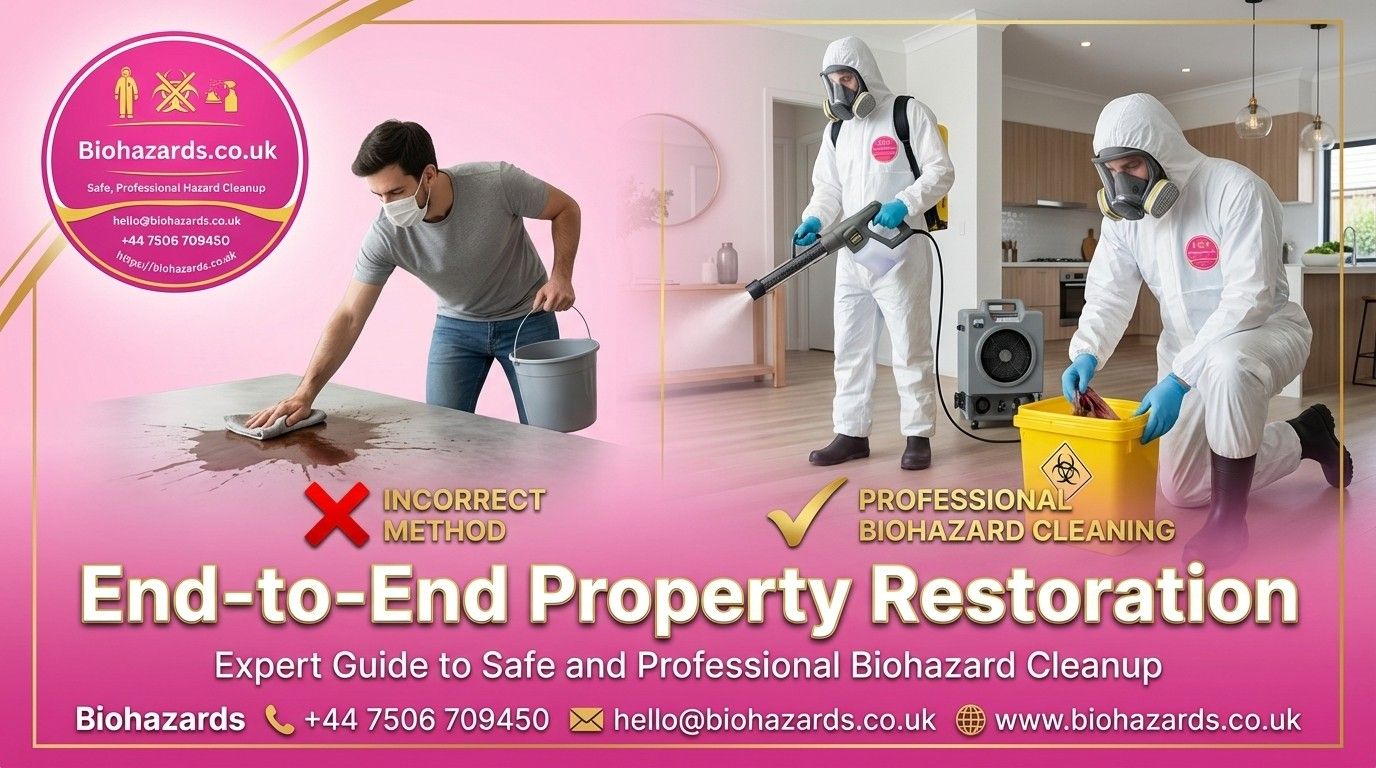
9. End-to-End Property Restoration
We don’t just clean — we restore properties to safe, usable condition. Our end-to-end services include:
-
Removal of contaminated materials
-
Deep cleaning of walls, ceilings, and floors
-
Upholstery and carpet cleaning
-
Odour neutralisation and air purification
-
Full decontamination and disinfection
This approach ensures that properties are completely restored and ready for reoccupation, whether residential, commercial, or industrial.and you can call on +44 7506 709450
10. Trusted by Clients Across the UK
As the UK’s first biohazard cleaning company, Biohazards.co.uk has built a reputation for reliability, professionalism, and care. Our clients include:
-
Homeowners and landlords
-
Businesses and office managers
-
Property managers and estate agents
-
Public sector organisations and care facilities
We combine technical expertise with compassionate service, creating a benchmark that other companies simply cannot match.
Contact Biohazards.co.uk Today
When dealing with trauma, crime scene contamination, hoarding, drug paraphernalia, sewage, nicotine, mould, or any biohazard scenario, don’t take risks.
Biohazards.co.uk provides specialist cleaning services across the UK, ensuring safe, compliant, and discreet remediation for every situation.